Skip to content
Why Does Tempered Glass Spontaneous Breakage?
Reliable Supply, Remarkable Quality — Choose Vivois Glass
Tmpered Glass Spontaneous Breakage: Causes and Control Strategy
Tempered glass spontaneous breakage is a common industry challenge. It cannot be completely eliminated (100% prevention is impossible), but through systematic quality and engineering control, the risk can be reduced to an extremely low level (industry standard ≤0.1%).
The key lies in full-chain management covering:
raw glass → processing → design → installation → application
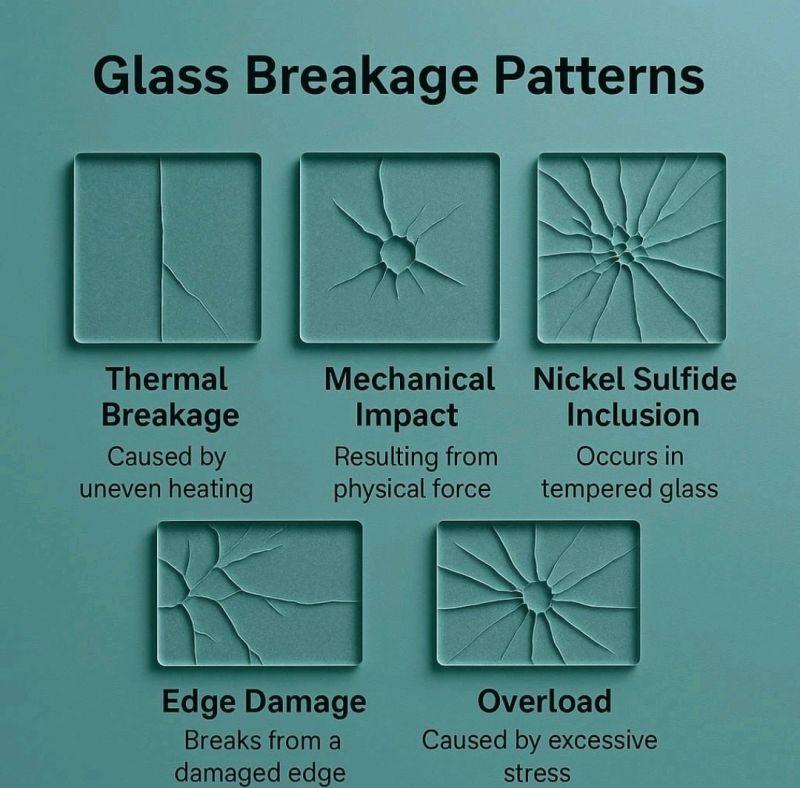
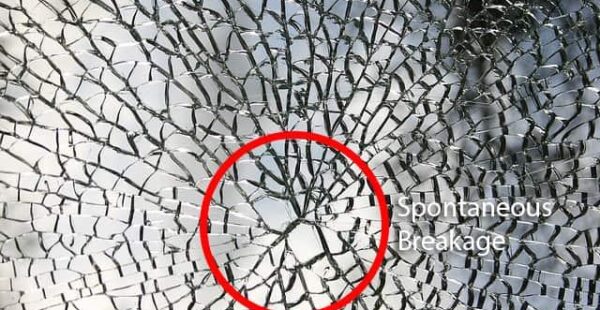
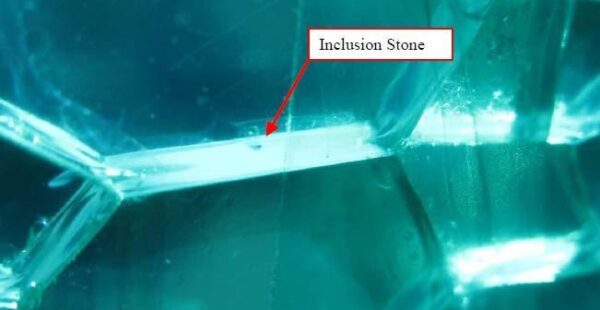
1What Is Tempered Glass Spontaneous Breakage?
Tempered glass spontaneous breakage refers to the sudden failure of glass without any external force. The glass typically shatters into small, uniform fragments.
Core Causes:
- Internal stress imbalance
- Impurity expansion (especially nickel sulfide, NiS)
Main Causes of Spontaneous Breakage (Critical Control Points)
 Nickel Sulfide (NiS) Inclusions
- The primary cause (over 80% of cases)
- Stable at high temperatures but undergoes phase transformation during service
- This leads to volume expansion, which eventually causes the glass to fracture
 Uneven Internal Stress
- Caused by non-uniform cooling during tempering
- Edges, holes, and cut areas are the most sensitive zones
 Glass Processing Defects
- Micro-cracks from cutting
- Poor edge grinding
- Stress concentration around drilled holes
 Installation and Usage Issues
- Frame pressure or improper fitting
- Excessive temperature differences (thermal stress)
- Uneven load distribution
How Vivois Reduces Spontaneous Breakage Risk
At Vivois, we understand that spontaneous breakage cannot be 100% eliminated, but it can be minimized to an extremely low level (≤0.1%) through full-process control.
1. Premium Raw Glass Selection
We start with high-quality float glass, minimizing impurities like nickel sulfide from the source. This is critical for Elevator Door Roller glass applications where reliability is non-negotiable.
2. Advanced Tempering Technology
Vivois uses state-of-the-art tempering furnaces with precise temperature uniformity control. This ensures balanced internal stress distribution, reducing the likelihood of spontaneous breakage in Elevator Door Roller systems.
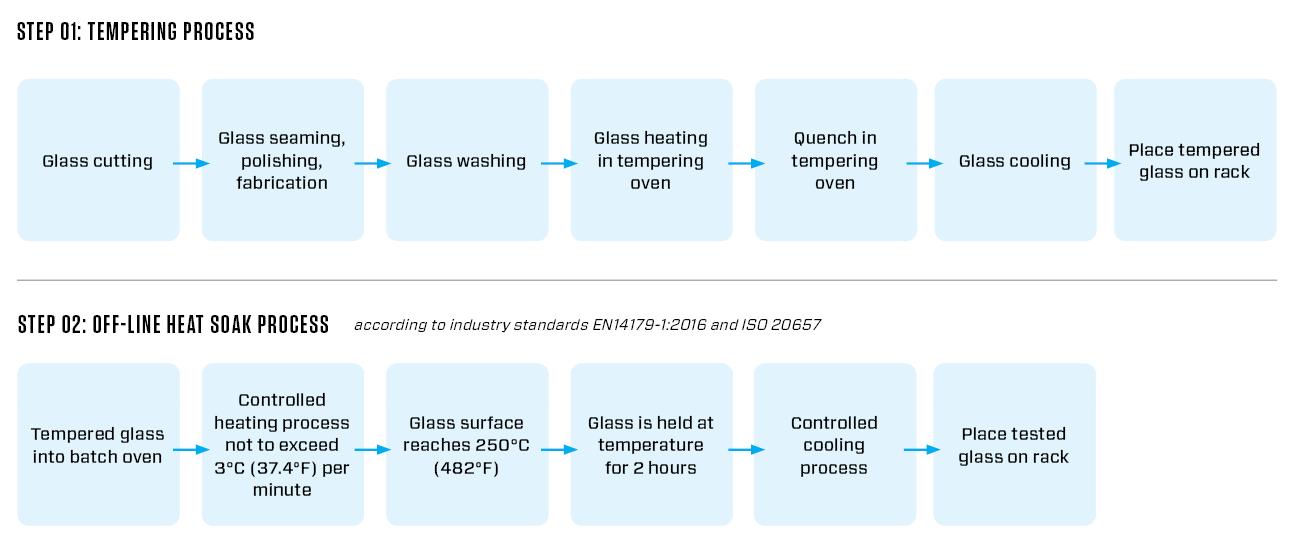
3. Heat Soak Testing (HST)
We apply Heat Soak Testing to detect and eliminate glass panels containing NiS inclusions before delivery. This process significantly reduces failure risks in sensitive environments like Elevator Door Roller installations.
4. Precision Edge Processing
Edge quality is a critical factor. Vivois uses CNC edge grinding and polishing to remove micro-cracks, enhancing durability for Elevator Door Roller glass components.
5. Strict Quality Inspection
Each batch undergoes rigorous inspection, including:
- Surface stress testing
- Fragmentation analysis
- Optical distortion checks
This ensures every piece used in Elevator Door Roller systems meets international safety standards.
Equipment and Manufacturing Advantages to Reduce Tempered Glass Spontaneous Breakage
Vivois invests heavily in advanced production infrastructure to ensure consistent quality:
- Fully automated cutting lines for precision sizing
- Intelligent tempering systems for stress optimization
- Automated inspection equipment for defect detection
- Clean, controlled production environments
These capabilities allow us to deliver high-performance tempered glass tailored for demanding applications.
Processing Precision: The Hidden Determinant
Many cases of spontaneous tempered glass breakage originate from invisible processing defects.
Vivois emphasizes high-precision processing to eliminate these risks:
- Precision cutting to minimize micro-crack formation
- CNC edge grinding and polishing to enhance edge strength
- Uniform heating and cooling during tempering
- Strict control of surface stress distribution
Design-Level Control in Architectural Applications
In architectural glass projects, spontaneous breakage is not solely a manufacturing issue—it is also closely linked to design decisions.
To minimize risk, architects and engineers should consider:
- Panel Size Control
Oversized glass panels are more prone to uneven stress distribution. Proper segmentation based on structural conditions is essential. - Thickness Matching
Glass thickness should be selected according to wind load, building height, and relevant safety standards. - Edge & Corner Design
Avoid sharp corners and stress concentration areas to improve impact resistance. - Cut-Out Standards
All holes and notches must comply with engineering specifications to prevent localized stress amplification. - System Compatibility
Curtain wall and window systems should avoid rigid constraints on glass, reducing stress transfer from the structure.
Tempered Glass Spontaneous Breakage is a known but controllable issue. Through premium materials, Heat Soak Testing, precision engineering, and advanced equipment, Vivois ensures a safer, more reliable solution.
Links: